
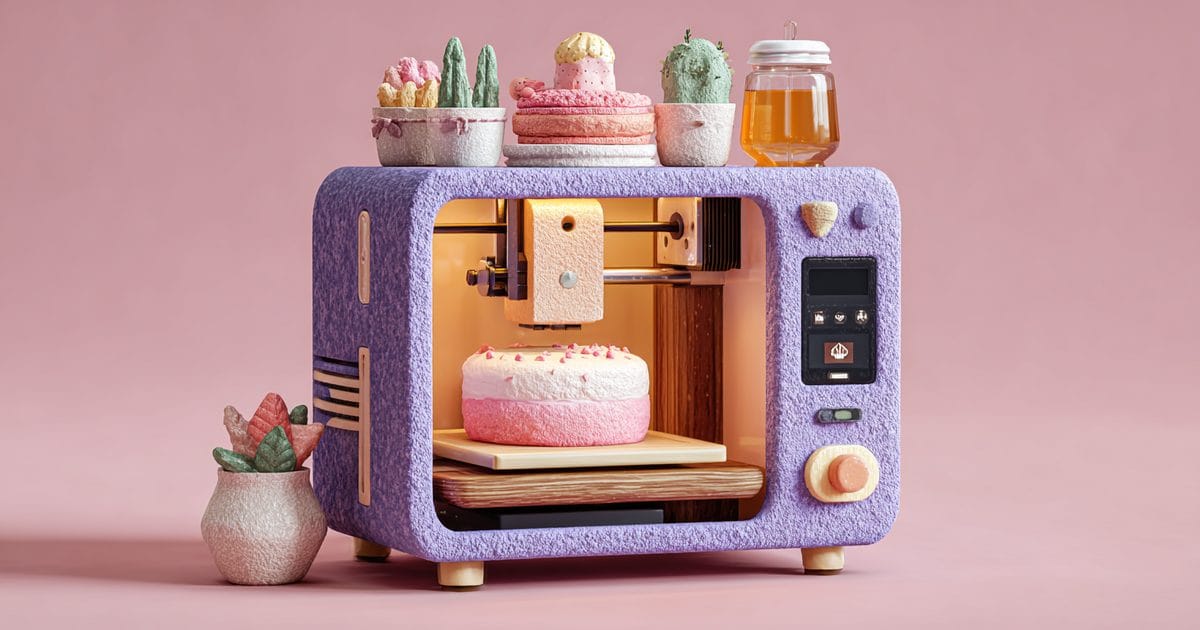
Every 3D printer owner faces the same temptation in gift season: I could just print something. And they’re right — a printer is a gift factory. The catch is that the world already has enough grey benchies and dragon skulls. The difference between a 3D-printed gift that gets treasured and one that gets binned is the same as any gift: it has to be for them, not for the printer.
Here’s what actually lands, from the workshop to the wrapping paper.
The rule: print solutions, not objects
The best-received prints solve a problem the recipient actually has. That knowledge comes from the same place all good gifting comes from — paying attention, and lists. A wishlist that says “my desk cables are chaos” or “I can never find my keys” is a print queue in disguise.
Practical prints with a high keep-rate:
- Custom organisers — drawer inserts sized to their drawer, tool holders for their tools, the tray that fits that one annoying cupboard. Measure sneakily; the custom fit is the gift.
- The repair or upgrade — the discontinued knob for their appliance, the bracket that fixes the wobbly shelf, the adapter that shouldn’t need to exist. “I fixed your thing” is a love language.
- Kitchen and desk quality-of-life: headphone stands, phone docks angled for their video-call setup, board-game inserts for the games they actually own.
- Hobby-specific jigs and holders — paint racks for the miniature painter, spool holders for the crafter, cable combs for the PC builder.
Personalised pieces (the sentiment tier)
Personalisation is where a printed gift outruns anything bought: name plaques in their favourite colourway, cookie cutters of the family dog, topographic maps of the place they got married, lithophanes of a photo that matters (backlit, these genuinely stun people who’ve never seen one). Keep text minimal and fonts restrained — the line between personalised and novelty is thinner than a first layer.
Print + purchase: the hybrid gift
Some of the best maker gifts wrap a print around a bought item: the custom stand holding the good headphones, the printed organiser pre-loaded with real art supplies, the dice tower plus the actual board game. The print carries the thought; the purchase carries the substance. This also scales into hampers — a printed basket-filler among bought ones.
What to skip
- Trinkets without a person attached — if it could go to anyone, it lands with no one.
- Anything food-contact in standard PLA without checking safety — cookie cutters yes, coffee cups no.
- Rough prints. Sand it, finish it, deburr it. A gift with visible layer-line whiskers says “I had spare filament,” not “I thought of you.”
One more coordination note: printed gifts take print time, and December queues are real. Claim the gift-slot early, print in November, and join the smug ranks of the pre-December finishers.
Quick answers
Are 3D-printed gifts tacky? Only the unconsidered ones. A generic dragon is filament with no recipient; a drawer organiser measured to their drawer is bespoke manufacturing. The tackiness lives in the choosing, not the printing.
What’s the best filament for gifts? PETG or ASA for anything functional (durability, temperature), silk PLA for display pieces, and nothing porous for food contact without proper research. Finish quality — sanding, deburring — matters more than material exotica.
How long before Christmas should I start printing? Lock the queue by mid-November: December print queues collide with December everything-else, and multi-part projects always need a reprint somewhere. The October rule applies at desktop scale.
Can I sell prints as gifts for others to give? Check each design’s licence — plenty of creators allow personal gifting but not commercial sale. For family gifting, print freely; the etiquette is the same as any handmade tier: effort spent where it’s understood.
Originally published on the GiftGambit blog.