
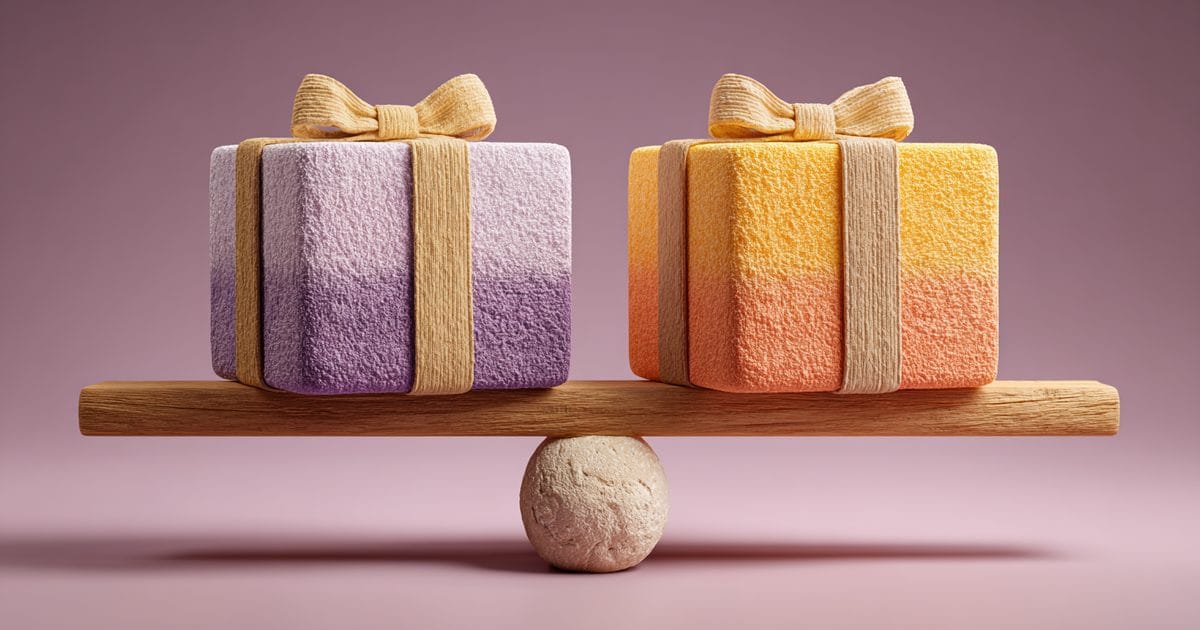
Ask people about the best gift they ever received and the answers split into two camps: a thing they still own, or a day they still talk about. Consumer psychology research has spent two decades on this question and keeps landing in the same place — experiences tend to produce more durable happiness than objects. But the research comes with fine print that most gift-guides skip.
Why experiences punch above their price
Three mechanisms, roughly:
- Anticipation counts. An experience is enjoyed three times — looking forward to it, doing it, and retelling it. An object mostly gets one unboxing.
- No comparison shopping. A gadget invites “the newer one is better.” A day at the coast with your dad does not.
- They become identity. Things sit in cupboards; experiences become stories, and stories become part of how people describe their lives.
There’s a bonus for the wants-nothing crowd and the grandparents with full cupboards: experiences require zero storage.
The fine print: when things win
Objects beat experiences reliably in three cases:
- The tool for the passion. For someone deep in a hobby, the right object is an experience generator — the good pan cooks a hundred dinners. If it’s on their list, the list wins.
- Daily-use upgrades. Things used every day (the good pillow, the good knife) deliver a small hit of gratitude daily for years. Quiet, compounding gifts.
- Kids under about eight, who would like the box the experience came in, please.
How to give an experience properly
The failure mode of experience gifts is vagueness. “A voucher for a massage sometime” carries a whiff of homework — the recipient must now plan their own present. Fix it with specificity:
- Book it. A date, a time, a confirmation email. The booking is the gift.
- Go with them when the relationship suits — shared experiences outperform solo ones in the research, and “tickets for both of us” says something “a voucher for you” doesn’t.
- Wrap something physical. Experiences suffer at hand-over time (“here’s… an envelope”). Print the tickets nicely; add a small themed object — the beach towel with the coast trip.
- Mind the expiry date. A voucher that expires unused converts a gift into guilt. Booked beats open-ended, always.
The family angle
Experiences scale beautifully as group gifts: five siblings funding one great dinner for the parents beats five mid-tier objects, and milestone birthdays almost demand it. They also solve the “what do we get the family that has everything” problem at Christmas — a family zoo membership or streaming year covers a whole household in one line.
And put experience wants on the wishlist like anything else: “would love to see anything at the Comedy Festival” is a claimable item. The best gift you’ll give this year might not be a thing — but it should still be on the list.
Quick answers
Are experience gifts better than physical gifts? For most adults, research says yes — more anticipation, no clutter, better stories. The exceptions are real though: hobby tools, daily-use upgrades and anything specifically listed beat a generic experience.
What’s a good experience gift under $50? Cinema for two with snacks money, a class voucher (pottery, cooking, climbing), mini golf and dinner, or the entry fee for something they’ve mentioned. Book a date where possible — the calendar entry is what separates a gift from homework.
How do you wrap an experience gift? Physically: printed confirmation in a card, plus one small themed object — the beach towel with the coast trip, the popcorn box with the movie pass. Hand-over theatre matters; an email forward is not a present.
Do experience gifts work for kids? From about eight, increasingly well — especially with a chosen friend or parent. Under eight, the object usually wins, and the party-circuit rules apply instead.
Originally published on the GiftGambit blog.