
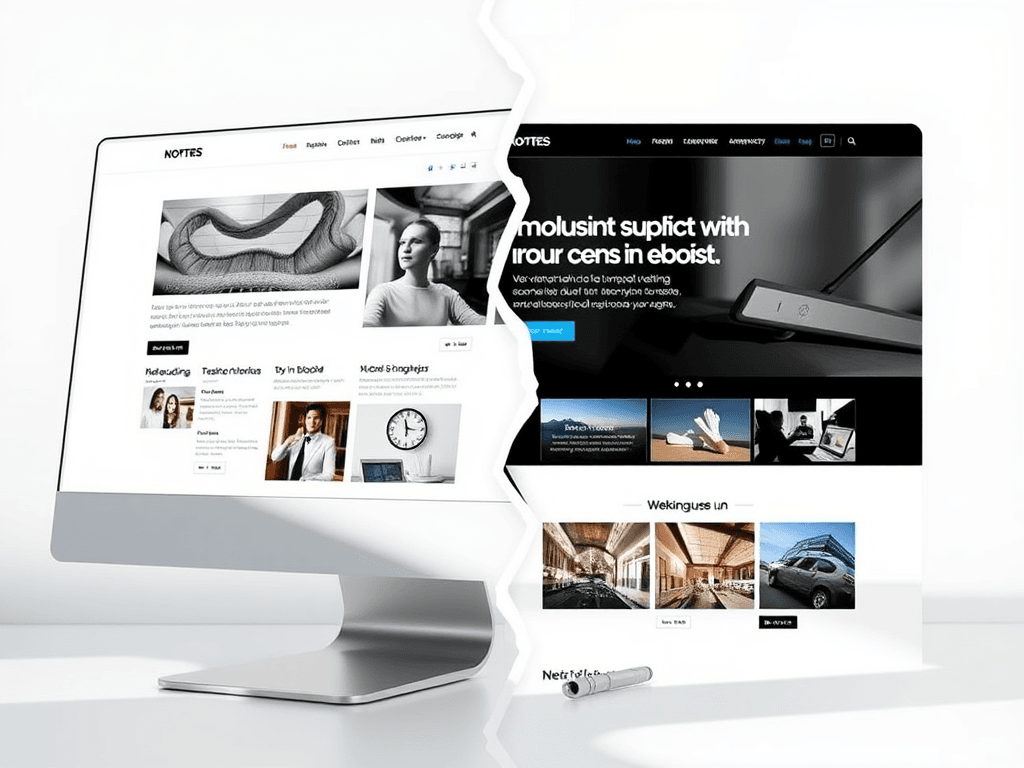
We get it — a website is a big investment. You work hard to get it designed, launched and live, and for a while it looks great. But the reality is simple.
No website stays “good enough” forever.
The web moves, your business moves, and a site that was sharp three years ago can quietly start working against you. The trick is telling the difference between “needs a few tweaks” and “needs a real redesign.” Here is how to tell.
The Signs It’s Time for a Redesign
- It looks dated. Design ages fast; a site that screams “2015” undercuts your credibility before anyone reads a word.
- It is not mobile-friendly. If it pinches, squints or side-scrolls on a phone, you are losing most of your audience.
- It is slow or unreliable. Sluggish loads or occasional downtime frustrate visitors and hurt your rankings.
- Traffic is sliding or bouncing. A climbing bounce rate or falling visits is often the site, not the market.
- You can’t easily update it. If changing a price or adding a page means calling someone, the platform is fighting you.
- It no longer reflects your business. New services, new audience, new brand — but the site still tells the old story.
- It is invisible in search. If you are nowhere on Google for your own services, structure and SEO likely need rebuilding, not patching.
Redesign, or Just a Few Tweaks?
Not every problem needs a full rebuild. A tired colour scheme, a stale homepage or a handful of dated pages can often be refreshed in place. But when the issues are structural — slow at the core, unmanageable to edit, not built for mobile, or fundamentally off-brand — patching just delays the inevitable and costs more in the long run. That is the moment to plan a proper redesign rather than keep applying band-aids.
What a Good Redesign Actually Fixes
A redesign is not just a new coat of paint. Done well, it rebuilds the foundation: a structure search engines can read, performance that holds up on mobile, a layout built around how people actually use the site, and a platform you can update yourself. Aesthetics are the visible part; the real value is a site that works harder and grows with you. A website was never meant to be a one-time project — see why a website is never a one-time project and what ongoing maintenance involves for the bigger picture.
So before you patch the same problems again, take an honest look. If you are nodding along to more than a couple of the signs above, it is probably time to stop tweaking and start planning. We are happy to take a look and tell you straight whether it is a refresh or a rebuild.